
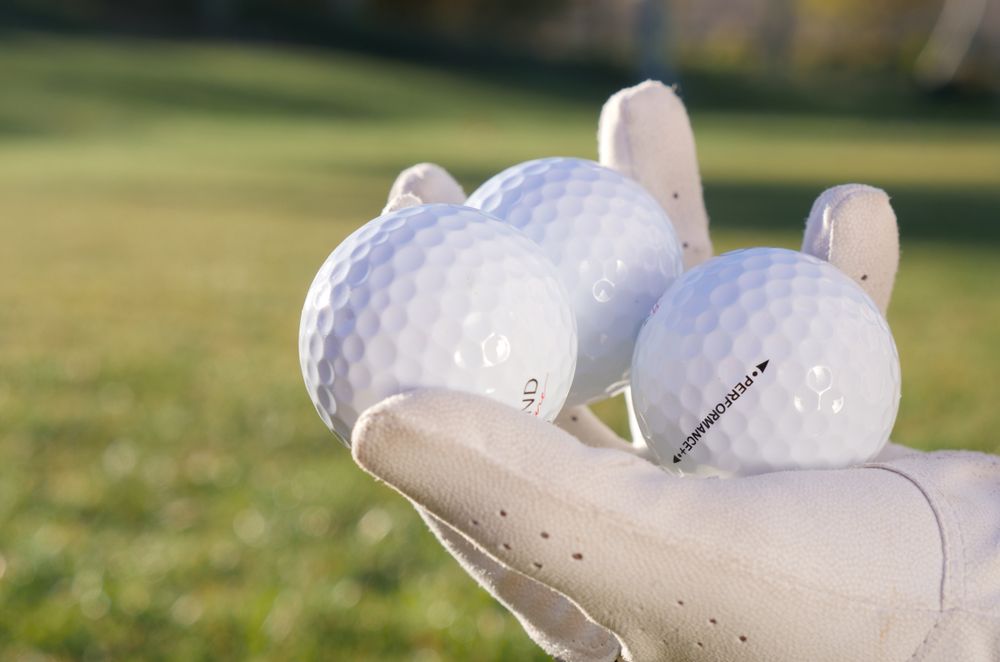
What’s your reaction the moment you see a wedge shot land softly, bite into the green, and spin back toward the hole like it’s on a string? Moments like that show up constantly on PGA Tour broadcasts, and they look like a special effect, something reserved for the pros. In reality, it’s backspin in golf: a repeatable outcome of a few specific, learnable factors, like the ball you play, the grooves on your clubface, and the way you deliver the club into impact.
If you’re failing to replicate it, it’s probably not because you’re swinging wrong; you’re likely missing the one ingredient tour pros never talk about on TV: real backspin. Every weekend golfer eventually asks the same question: how do I put backspin on a golf ball? We’ll cover everything from what a good golf ball for backspin actually looks like to the technique adjustments that help you spin a golf ball with control, using the same principles Tour players rely on.
Key Takeaways
- Backspin comes when four things: club loft, a descending strike, clean grooves, and a soft-cover golf ball, work together.
- The USGA and The R&A set strict, published limits on groove volume and sharpness, so a legal wedge from a major brand already gives you the legal spin ceiling.
- PGA Tour players average roughly 8,000–10,000+ rpm of spin with a pitching wedge, according to Trackman data, not a target for every amateur shot.
- A premium urethane-cover ball, a descending blow with ball-first contact, and dry, clean grooves are the fastest ways to add real stopping power.
- Genoa Golf Club’s practice facilities and two championship courses give you the greens to test it on.
What Is Backspin and Why It Actually Matters
Backspin isn’t a talent. It’s a formula, and once you know it, you can reproduce it. It is the backward rotation imparted on a golf ball at impact, which creates lift and, on descent, causes the ball to check up or even roll backward after it lands. It is governed by the same physics: the Magnus effect that makes a spinning ball curve or hold in the air longer than a ball with little rotation.
For golfers, backspin isn’t about style points. It is the mechanism that lets you attack tucked pins with a short iron or wedge and have the ball stop near where it lands, instead of releasing 20 feet past the hole. More spin also tends to mean a higher, softer trajectory that holds up better in the wind and on firm greens.
How To Create Backspin On A Golf Ball
Distance spin and short-game spin are two different ideas. With a driver, less spin is usually better because excess spin balloons the ball and costs distance. With wedges and short irons, more spin within reason is exactly what you want. We will focus on the second scenario: generating controlled, useful backspin on approach and wedge shots.
1. Choose the Right Golf Ball for Backspin
Start with equipment because no swing change can fully compensate for the wrong golf ball.
Urethane Covers vs. Ionomer (Surlyn) Covers
Premium tour-style balls use a soft, thin urethane outer cover, which grips the grooves of an iron or wedge far more effectively than the harder ionomer (often branded Surlyn) covers found on distance-oriented, budget-friendly balls.
Although durability and price are tradeoffs since urethane-cover balls generally cost more and scuff more easily, they are the standard choice for players who prioritize short-game control over long-game distance.
If you’re currently playing a two-piece distance ball and wondering why your wedge shots won’t check-up, switching to a urethane-cover, multi-layer ball is often the fastest single upgrade you can make.
| Feature | Urethane-Cover Ball | Ionomer/Surlyn Ball |
| Cover feel | Soft, grips grooves | Firm, less grip |
| Wedge spin | High | Low to moderate |
| Driver spin | Tunable/low (multi-layer) | Often higher |
| Durability | Scuffs more easily | More durable |
| Best for | Short-game control | Distance & value |
Compression and Layers Matter Too
Lower-compression balls tend to suit slower swing speeds and can still spin well around the greens, while multi-layer (3-, 4-, or 5-piece) construction allows manufacturers to tune low driver spin with high wedge spin in the same ball. It’s the best of both worlds for most club golfers. Test two or three tour-level models on the same wedge shot to find what suits your swing.
2. Use Wedges With Sharp, Conforming Grooves
Grooves channel away grass, moisture, and debris at impact so the clubface can make cleaner contact with the ball, and that clean contact creates friction-driven backspin.
Golfers often assume that newer, pricier wedges automatically spin more. In reality, the USGA and The R&A jointly regulate groove volume and groove-edge sharpness on all clubs except drivers and putters. This rule took effect for new club models on January 1, 2010, specifically to prevent groove design from generating unlimited spin out of the rough. Practically, that means any current, conforming wedge from a major manufacturer already gives you the maximum spin the rules of golf allow from clean, dry conditions. According to the USGA’s official groove FAQ, these specifications apply to irons, wedges, hybrids, and fairway woods with 25 degrees of loft or more. So your pitching, gap, sand, and lob wedges are all covered under the same legal ceiling.
A 10-Second Groove Check
Drag a fingernail across the face of your primary scoring wedge. Sharp, defined edges mean you’re still getting full spin potential. Rounded, smoothed-over edges mean it’s time for a to replace it. Grooves wear down gradually with every shot, especially from sand and rough, and worn grooves lose their ability to grip the ball. Most instructors suggest replacing them every 60–75 rounds, or sooner if you play frequently on abrasive Bermuda or sandy conditions.
3. Master a Descending, Ball-First Strike
Even the best ball and freshest grooves can’t create backspin without the right angle of attack. Backspin comes from compressing the ball against the clubface and taking a shallow divot after impact, not from scooping or lifting the ball into the air.
Hit the Ball Before the Turf
On full wedge shots, the club should strike the ball first and the ground second. This descending blow, combined with the club’s loft, squeezes the ball into the grooves and generates high spin. A steeper angle of attack created by playing the ball slightly back of center and leaning the shaft forward at address increases this compression.
Keep Your Hands Ahead of the Clubhead
Forward shaft lean at impact, with your hands slightly ahead of the ball, delofts the club just enough to promote a descending strike while still using the wedge’s built-in bounce and loft to get the ball airborne. This is a core fundamental taught across most modern short-game systems, and one of the most common technical fixes for golfers who complain their wedge shots never check-up.
Accelerate Through Impact, Don’t Decelerate
A common amateur mistake is slowing the clubhead down just before impact, which reduces both ball speed and spin. A confident, accelerating swing through the ball even on a short 30-yard pitch creates more friction and more consistent spin.
4. Maximize Friction at Impact: Small Details
Spin is, at its core, a friction problem. Anything that reduces friction between the clubface and the ball reduces spin, and anything that increases clean contact increases it.
- Keep grooves clean: Dirt, sand, and wet grass in the grooves are among the most common and easiest-to-fix causes of low-spin, flier shots.
- Play from dry conditions when possible: Moisture between the ball and face (from wet turf, dew, or rain) reduces friction, which is why ‘flier lies’ from wet rough fly farther and spin less.
- Wipe the ball between shots: Clean, dry ball surface grips the grooves better than one covered in dirt from the previous lie.
- Practice consistent center-face contact: Impact toward the toe or heel bleeds spin and ball speed, even with a technically correct swing.
5. Know What Realistic Spin Numbers Look Like
According to Trackman’s published Tour Averages, PGA Tour players average roughly 8,400 rpm of backspin with a full pitching wedge swing, with sand and lob wedges commonly climbing toward 9,000–10,500+ rpm, depending on conditions and technique. Tour-level driver spin, by contrast, averages closer to 2,500 rpm, a reminder that the driver and the wedge chase opposite goals.
Understand that these numbers are benchmarks, not a scorecard. Recreational players with slower swing speeds will naturally generate less spin than tour professionals, and that’s fine. The goal is a ball flight and landing behavior that lets you control distance and hold greens, not a specific number on a launch monitor.
Common Mistakes That Kill Backspin
Even golfers who understand the theory behind backspin often lose it to small, repeatable habits:
- Playing an old, hard-cover distance ball on approach shots and wedges instead of a urethane-cover ball.
- Using worn-out wedges with rounded, non-conforming grooves well past their useful life.
- Scooping or lifting the ball at impact instead of hitting down and through it.
- Letting the clubhead decelerate on short, delicate-feeling pitch shots.
- Ignoring dirty grooves and a dirty ball, especially after a shot from the rough or a bunker.
Most of these are five-minute fixes once you know what to look for: a quick groove check, a wipe of the ball, or a small adjustment in ball position can be the difference between a shot that skips through the green and one that checks up next to the pin.
Put It Into Practice at Genoa Golf Club
Reading about spin only gets you so far; you need real turf and real pressure to make it stick. Genoa Golf Club in Genoa, Nevada, gives you the ideal proving ground to put these fundamentals to work across two championship layouts: the Lakes Course, with water hazards and firm, well-defended greens, and the Ranch Course, with its desert-style layout and dramatic Carson Valley views. Both courses reward golfers who can control spin and stick approach shots close.
If you’re serious about developing a more reliable short game, a Genoa Golf Club membership gives you repeated access to both courses. You can sharpen your wedge play and test different golf balls under real playing conditions, hole after hole. Or if you’re planning a group outing or company day instead, check out Golf Outings at Genoa Golf Club to build a round around it.
Book a tee time at Genoa Golf Club and put your new backspin technique to the test on our greens. And for more swing tips, equipment guides, and course news, browse the Genoa Golf Club blog.
Frequently Asked Questions
1. What is the easiest way to add backspin to a golf ball?
The fastest improvement usually comes from switching to a urethane-cover golf ball and making sure your wedge grooves are clean and not excessively worn. From there, focus on a descending, ball-first strike to add the technique side of the equation.
2. Does a more expensive golf ball really spin more?
Generally, yes. Premium, multi-layer balls with a urethane cover are engineered specifically to grip the clubface grooves for higher short-game spin. In contrast, cheaper two-piece distance balls use a harder cover designed for durability and distance rather than control.
3. Can I put backspin on a golf ball with any wedge?
Any conforming, current wedge can produce backspin, but the amount depends on the condition of its grooves and the loft you’re using. A wedge with rounded, worn grooves will spin noticeably less than a newer wedge, even with identical technique.
4. Why does my ball not spin even when I hit a good wedge shot?
Low spin on a solid-feeling shot is usually caused by one of three things: a hard-cover distance ball, dirt or moisture on the clubface or ball at impact, or a shallow, scooping angle of attack instead of a descending strike.
5. Does backspin work the same way out of the rough?
No. Grass that gets trapped between the ball and the clubface at impact — often called a ‘flier lie’ — reduces friction and spin, which is why shots from the rough tend to fly farther and roll out more than shots from a clean fairway lie.